

Protecting Perennials and Shrubs from Frost
Posted on January 20, 2026 by Van Becelaere Greenhouse
Protecting perennials and shrubs from frost in southeast Kansas starts with understanding how cold weather stresses plants and what simple steps keep them thriving into spring.
Understanding Frost
Frost may look delicate, but it can be surprisingly destructive to garden plants in southeast Kansas. To better understand when and how to protect your landscape, it helps to know what frost is and why certain types of growth are more vulnerable to frost damage.
- Frost forms on clear, calm nights when heat radiates from the soil and plant surfaces, allowing temperatures at the plant level to drop below freezing.
- Actively growing foliage and new buds are most at risk, while dormant plants tolerate cold better because their tissues are “hardened off.”
Identifying Vulnerable Perennials and Shrubs
In Pittsburg’s climate, late spring and early fall frosts can catch tender growth off guard.
Plants recently planted, those breaking dormancy early, and moisture‑stressed perennials and shrubs are typically more vulnerable to injury such as blackened leaves, wilted new shoots, and dieback.
How to Protect Plants From Frost
Effective frost protection focuses on trapping heat and reducing sudden temperature swings.
For home gardeners, protecting perennials can be as simple as combining good watering practices with temporary covers on cold nights.
Use these steps when a frost is in the forecast:
- Water the soil earlier in the day so moist ground can store and release heat overnight.
- Add 2–4 inches of mulch, creating a well that is roughly 1-2 inches from the trunk, as close to the base of perennials and shrubs to insulate roots and moderate soil temperature.
- Move smaller containers close to the house or into a garage to shield them from radiational cooling.
- Cover tender plants before sunset to capture warmth, then remove covers the next morning once temperatures rise above freezing.
These habits are key to protecting perennials without much extra equipment.
Frost Cloth for Plants
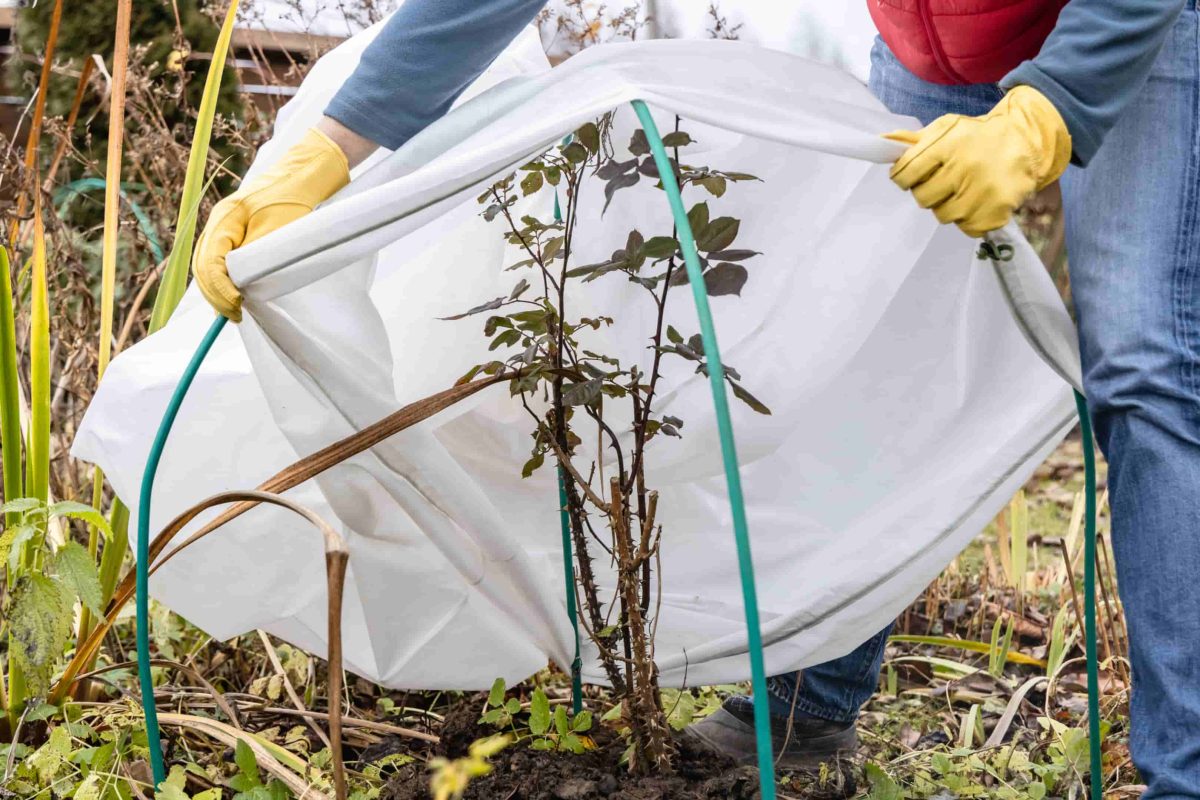
When nights dip below freezing, breathable fabric makes a big difference for shrubs and herbaceous beds from frost.
Extension specialists recommend draping frost fabric, sheets, or blankets over a simple frame so the material reaches the ground and traps radiant heat around the plant canopy.
Using frost cloth correctly helps protect perennials while still allowing some light and air movement, reducing problems with excess moisture or breakage.
Early Spring Recovery
Even with good frost protection, some foliage may still be nipped in late cold snaps.
Research from university and botanical garden experts notes that many established perennials will push new growth after frost damage, so lightly damaged leaves can be left or trimmed once new shoots appear.
For woody perennials and shrubs, wait until growth has fully emerged to see which branches are truly dead, then prune back only the non‑leafing sections and continue regular watering and mulching to support recovery.
With these approaches, protecting perennials becomes a season‑long mindset rather than a one‑night scramble, and Pittsburg gardeners can enjoy healthier perennials and shrubs year after year.
Finishing Touches for Your Frost-Ready Garden
Before the next cold snap rolls through Pittsburg, Kansas, make a plan for your garden—not just to survive winter cold, but to come back stronger in spring. If you are unsure which perennials and shrubs are most at risk at your home, or what kind of frost protection will work best in your specific yard, that is exactly where the team at Van Becelaere Greenhouse can help.
Bring your questions, photos, or even a quick list of the plants in your beds, and stop in to talk with the staff about practical options for protecting perennials, choosing frost cloth for plants, and planning for early spring recovery. Whether you are just getting started or have gardened in Crawford County for years, a short visit can give you the confidence, supplies, and local know‑how you need to keep your perennials and shrubs thriving all season long.