

Why Are My Chickens Not Laying Eggs? Kansas Winter Feeding Tips
Posted on October 29, 2026 by Van Becelaere Greenhouse
If you raised your first backyard flock recently, your first slow winter can feel alarming. Nest boxes that filled every morning in June sit empty by November, and new owners start asking, “Why are my chickens not laying eggs?” Your hens usually react to shorter days, seasonal molt, and colder weather, and a few changes can help them through it.
Why Are My Chickens Not Laying Eggs in Winter?
Daylight is the biggest factor. University of Illinois Extension says chickens need 14 to 16 hours of light to encourage egg-laying, far more than a Kansas winter day provides. University of Minnesota Extension recommends adding morning light before sunrise so hens can still find their roost at dusk. Once you start, keep the schedule steady, because Penn State Extension warns against shortening the lighting period for laying hens.
How Long Do Chickens Molt and Stop Laying?
If your hens are dropping feathers, molt may be the real answer to “Why are my chickens not laying eggs?” So how long do chickens molt and stop laying eggs? Mississippi State University Extension says late molters finish in two to three months, early molters can take four to six months, and most hens stop laying until the molt ends.
What Should You Feed Laying Hens in Winter?
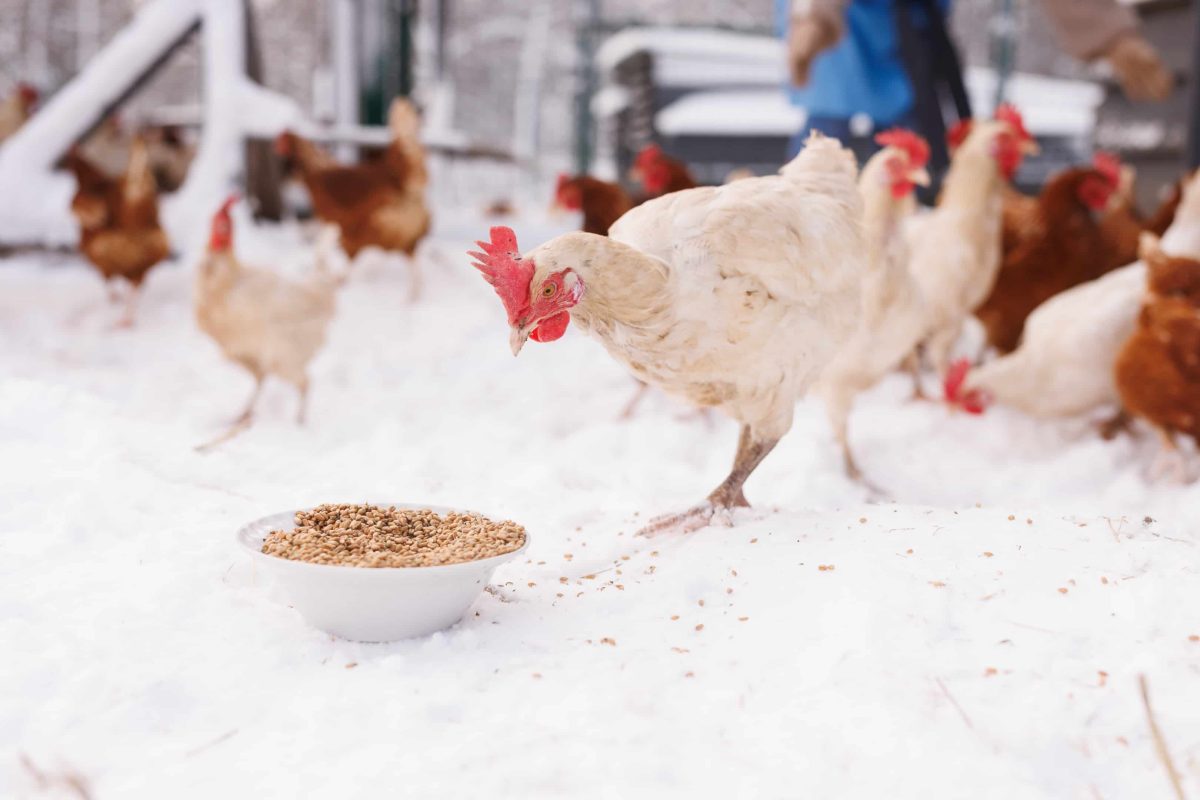
Next, check the feeder if you’re still asking, “Why are my chickens not laying eggs?” A complete layer feed should make up most of their diet. Oregon State University Extension says layer feeds contain about 16% protein and 3% to 4% calcium for strong shells. Then follow these steps:
- Feed a complete layer ration, such as Nutrena layer feed, every day.
- Offer oyster shell in a separate feeder to help with thin or rough shells.
- Limit scratch grains, which Oregon State calls unnecessary with a complete diet.
- Stock up before cold snaps. Minnesota Extension says feed intake may rise up to 25% in cold weather.
How Do You Keep Chickens’ Water From Freezing?
Feed only works if hens can drink. Penn State Extension advises never letting laying hens go without water for more than 12 hours, so a frozen waterer can leave you with chickens not laying eggs even after you fix light and feed. Here’s how to keep chickens’ water from freezing:
- Use a heated waterer or heated bowl, as Illinois Extension recommends.
- Check water in the morning and evening, because Illinois University Extension says chickens need water at least every 10 hours.
- Keep a spare waterer to swap in while the frozen one thaws.
How Do You Keep Chickens Warm With Straw?
Keeping chickens warm in winter starts with dry bedding. Minnesota Extension suggests 4 to 6 inches of straw or shavings, stirred as the top layer gets soiled so manure moves to the bottom. Don’t seal the coop airtight, though. Illinois University Extension says coops need ventilation to prevent ammonia buildup and reduce moisture.
Still wondering, “Why are my chickens not laying eggs?” Whether this is your first winter with hens or your 20th, Van Becelaere Greenhouse carries Nutrena layer feed and straw, and our team will help you build a winter routine that fits your coop. Call 620-231-1127, or stop by our store at 2513 E. 4th St., Pittsburg, KS 66762.